Driving a Lincoln through Oxford, Mississippi, means experiencing refined luxury, quiet cabin comfort, and smooth road performance—whether you are making a weekend trip down Jackson Avenue, driving near the University of Mississippi campus, or commuting along Highway 6. However, preserving the effortless driving dynamics and long-term resale value of a Lincoln Navigator, Aviator, Nautilus, Corsair, or MKZ requires consistent, high-standard attention. Proper Lincoln Car Care bridges the gap between sophisticated automotive engineering and everyday driver reliability.
Modern Lincoln vehicles incorporate high-output EcoBoost turbocharged powertrains, complex active suspensions, and intricate multi-module electronic networks. Adopting proactive ownership habits and prioritizing preventative Lincoln Car Care prevents minor component wear from escalating into severe mechanical failures.
This comprehensive guide outlines nine practical tips for Lincoln Car Care to help Oxford drivers protect their investment, maintain peak engine efficiency, and make informed decisions about professional service.
1. Follow Your Lincoln’s Recommended Maintenance Schedule
Proper Lincoln Car Care begins with strict adherence to Lincoln’s Intelligent Oil Life Monitor (IOLM) and factory maintenance intervals. Unlike generic service schedules that rely strictly on fixed mileage counts, Lincoln’s onboard systems adjust service alerts based on real-time driving conditions, engine operating temperatures, towing loads, and ambient weather across Lafayette County.
In Oxford, frequent short trips across town, extended engine idling during game-day traffic, and hot Mississippi summers place increased thermal stress on motor oil. Staying ahead of factory maintenance intervals ensures critical internal engine components—such as variable camshaft timing (VCT) solenoids and turbocharger bearings—remain fully lubricated and protected.
- When to call a mechanic: If your oil life indicator resets prematurely, or if you notice engine ticking during a cold start, consult a specialist to inspect oil pressure sensors and system integrity.
2. Pay Attention to Dashboard Warning Lights
A core aspect of effective Lincoln Car Care is responding immediately to computer diagnostic alerts. When a warning symbol illuminates on your Lincoln digital instrument cluster, an onboard computer module has detected sensor parameters outside normal operating thresholds.
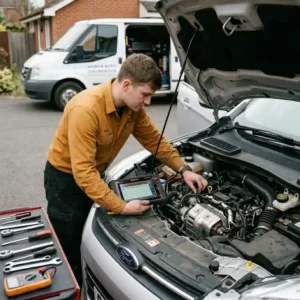
Whether your vehicle triggers a Check Engine light, an ABS warning, or the Powertrain fault indicator (the wrench icon), ignoring these alerts compromises fuel efficiency and vehicle safety. Generic OBD-II code scanners often miss proprietary Lincoln factory sub-codes. Complete Lincoln Car Care requires advanced diagnostic equipment capable of reading specific Powertrain Control Module (PCM) and Transmission Control Module (TCM) data logs.
- When to call a mechanic: A flashing Check Engine light indicates an active engine misfire that can rapidly melt internal catalytic converter elements. Stop driving immediately and seek expert diagnostic evaluation.
To learn how specialized scanning isolates complex electronic faults, explore our detailed Car Diagnostic Oxford guide.
3. Use the Right Oil and Fluids
Luxury automotive systems demand exact fluid chemistry. A critical element of Lincoln Car Care is selecting fluids that meet rigorous Lincoln Motor Company engineering standards (such as WSS-M2C946-B1 for EcoBoost engines or Mercon ULV for modern 10-speed automatic transmissions).
Using improper fluid grades can cause sluggish gear shifts, increased friction, and severe thermal breakdown in turbocharged engines:
- Synthetic Engine Oil: Maintains viscosity under extreme turbocharger heat.
- Transmission Fluid: Ensures seamless power delivery and preserves hydraulic clutch packs.
- Brake & Coolant Fluids: Protect internal seals against corrosion and maintain hydraulic pressure.
- When to call a mechanic: Dark, burnt-smelling transmission fluid or unexplained fluid drops on your driveway warrant an immediate leak inspection and fluid condition test.
For professional fluid services tailored to high-spec powertrains, visit our Lincoln Service hub.
4. Don’t Overlook Battery and Electrical Health
Modern Lincoln models operate dozens of interconnected microprocessors powering adaptive LED lighting, climate-controlled leather seating, active noise cancellation, and power-assisted liftgates. Consequently, Lincoln Car Care must include routine testing of the 12-volt battery and charging system.
Lincoln vehicles utilize a specialized Battery Management System (BMS) that actively regulates alternator output based on battery age and health. When replacing a battery, a technician must reset the BMS. Installing a battery without recalibrating the BMS can lead to overcharging, shortened battery lifespans, and erratic electrical glitches such as non-responsive infotainment screens.
- When to call a mechanic: Slow engine cranking, flickering ambient interior lights, or automatic start-stop system deactivate messages signal the need for professional battery testing and BMS calibration.
5. Monitor Brake Performance
The heavy curb weight and robust towing capacities of Lincoln SUVs require exceptional stopping power. Dedicated Lincoln Car Care involves paying close attention to changes in brake pedal feel and stopping distance.
Driving over steep hills or navigating stop-and-go traffic across Oxford wears down brake pads and rotors over time. High-pitched squeal sounds, steering wheel vibration during braking, or a soft, spongy brake pedal indicate that your braking system requires immediate professional evaluation.
- When to call a mechanic: Grinding metal-on-metal sounds indicate fully depleted friction material, which damages brake rotors and calipers.
6. Keep an Eye on Cooling System Health
Lincoln EcoBoost engines utilize turbochargers that operate under extreme heat, making cooling system maintenance vital to proper Lincoln Car Care. Coolant degrades over time, losing its corrosion-inhibiting properties and risking internal water pump or radiator leaks.
Sustaining correct coolant concentration levels prevents engine overheating, head gasket damage, and turbo housing warpage. Inspecting coolant hoses, expansion tanks, and electric cooling fans regularly keeps your engine operating within optimal temperature bands.
- When to call a mechanic: Unexplained coolant loss, sweet-smelling engine bay fumes, or rising temperature gauges require a pressurized cooling system leak test.
7. Notice Changes in Ride and Handling
Lincoln is famous for its smooth, floating ride quality—often supported by adaptive dampening suspension or air suspension systems. Incorporating chassis checks into your Lincoln Car Care routine ensures your luxury ride quality remains intact.
Navigating uneven pavement, potholes, or gravel roads across Lafayette County can wear down control arm bushings, sway bar links, ball joints, and struts. Symptoms of suspension wear include uneven tire tread, excessive body roll during cornering, or clunking noises when driving over speed bumps.
- When to call a mechanic: Vehicle leaning to one side, harsh bottoming-out over bumps, or loose steering response require a detailed chassis and suspension evaluation.
8. Use Proper Diagnostics Before Replacing Parts
A cornerstone of professional Lincoln Car Care and sound automotive stewardship is replacing parts based on verified diagnostic data rather than guesswork. Attempting to solve complex driveability issues by randomly swapping sensors is expensive and rarely addresses the root issue.
Comprehensive Lincoln Car Care relies on methodical troubleshooting: analyzing live PID data streams, testing electrical circuit continuity, verifying fuel rail pressures, and checking vacuum integrity. This scientific approach guarantees that only faulty components are replaced, saving you time and money.
- When to call a mechanic: Persistent driveability issues, intermittent stalling, or unresolved warning lights require professional oscilloscope testing and factory-level diagnostic software.
9. Know When to Call a Lincoln Specialist
While routine owner checks are valuable, comprehensive Lincoln Car Care requires specialized tools, technical software, and trained expertise. Knowing when to delegate service to a specialized mobile mechanic saves you from unnecessary stress.
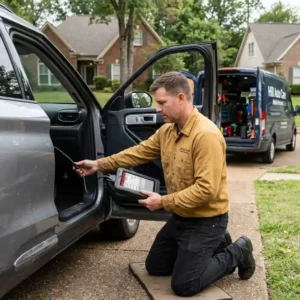
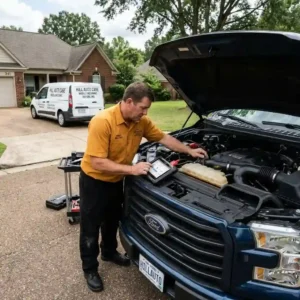
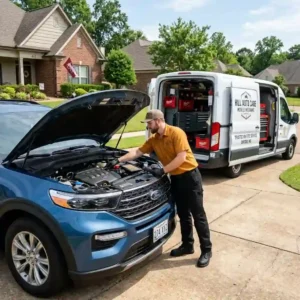
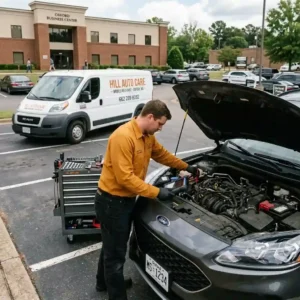
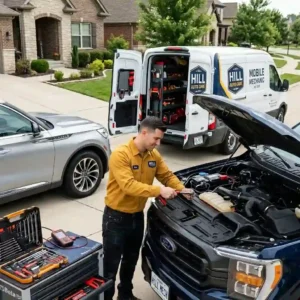
When your vehicle will not start in your driveway, or when busy work commitments make waiting in a traditional dealership lobby impractical, choosing a mobile Lincoln specialist brings shop-grade diagnostics, brake work, and maintenance directly to your home or office parking space in Oxford.
- When to call a mechanic: For starting failures, major brake overhauls, belt replacements, and complex diagnostic troubleshooting, mobile auto service offers maximum convenience with zero downtime.
Discover how seamless driveway repairs can be on our primary Mobile Mechanic Oxford page.
Lincoln Car Care: What Can You Check Yourself?
Responsible Lincoln Car Care does not require you to be a master technician. Drivers can safely perform several basic visual checks at home without specialized tools:
- Tire Inflation & Tread Depth: Check cold tire pressures monthly using a digital gauge to maintain fuel economy and smooth handling.
- Exterior Lighting: Walk around your vehicle to verify that LED headlights, turn signals, brake lights, and puddle lamps function properly.
- Windshield Wiper Blades & Washer Fluid: Top off washer fluid and inspect rubber wiper blades for splitting or streaking.
- Visual Engine Bay Check: Inspect for visible fluid drips, frayed serpentine belts, or loose battery terminal connections.
Performing these minor visual checks regularly helps you catch potential issues before they disrupt your daily schedule.
When Should a Lincoln Owner Call a Mechanic?
Knowing when to transition from basic visual monitoring to professional Lincoln Car Care protects both your safety and your vehicle’s mechanical components. Consult a professional specialist immediately when you observe:
- Active Fluid Leaks: Puddles of oil, red transmission fluid, or bright coolant pooling beneath your parked vehicle.
- Audible Mechanical Stress: Squealing brakes, knocking engine sounds, or heavy chassis clunks over minor bumps.
- Performance Changes: Engine hesitation during acceleration, harsh transmission shifts, or vehicle pulling to one side.
- Illuminated Safety or Engine Lights: Any persistent dashboard warning alert that remains on after engine start-up.
Frequently Asked Questions
1. How often does a Lincoln require an oil change in Oxford, MS?
Most modern Lincoln models equipped with the Intelligent Oil Life Monitor require oil changes every 7,500 to 10,000 miles under normal conditions. However, frequent short trips, extreme summer heat, or heavy towing in Oxford may require service every 5,000 to 7,500 miles.
2. Can a mobile mechanic perform Lincoln computer diagnostics at my home?
Yes. A specialized mobile mechanic carries factory-grade diagnostic scanners capable of plugging directly into your Lincoln’s OBD-II port to read PCM/TCM trouble codes, monitor real-time sensor data, and perform system resets right in your driveway.
3. Why is my Lincoln’s start-stop system no longer working?
The automatic start-stop system relies on specific battery charge thresholds. If your 12-volt battery is aging or its charge drops, the Battery Management System disables start-stop functionality to preserve main engine starting power.
4. What is the difference between Ford and Lincoln maintenance requirements?
While Lincoln vehicles share core engine architectures and chassis platforms with Ford models, Lincoln luxury platforms often feature active air suspensions, enhanced sound-insulation systems, and specialized electronic luxury amenities that require advanced diagnostic tooling during service.
5. Do mobile mechanics handle brake replacement for Lincoln SUVs?
Yes. Complete brake pad, rotor, and sensor replacements can be safely performed on-site at your home or workplace using heavy-duty mobile lifts, jack stands, and precision torque tools.
Need Lincoln Car Care in Oxford, MS?
Keeping your luxury SUV or sedan operating at its best does not mean losing half your day in a repair shop waiting room. Following standard vehicle safety guidelines recommended by agencies like the National Highway Traffic Safety Administration (NHTSA)
, addressing warning lights, worn brakes, and steering irregularities early keeps your vehicle safe, reliable, and smooth on Mississippi roads. Whether you require computer diagnostics, routine maintenance, brake overhauls, or emergency starting assistance, relying on a dedicated specialist guarantees your vehicle gets the precision care it deserves.
Contact Hill Auto Care today through our Contact Us page or visit our Lincoln Repair page to request your personalized quote and schedule professional Lincoln Car Care brought directly to your doorstep!