When something goes wrong inside an automobile, it rarely happens in complete silence. Long before a major mechanical failure leaves you stranded along Jackson Avenue or idling near the Square, your vehicle typically begins sending subtle warning signals through changes in how it shifts, accelerates, and responds to your foot on the gas pedal.
Among all mechanical systems, the transmission is one of the most communicative. Changes in gear engagement, unexpected delays in power delivery, or strange noises coming from under the floorboards are your car’s way of signaling that something is wrong. Learning how to decode these symptoms gives you a clearer path toward protecting your vehicle, saving on unnecessary replacement costs, and finding reliable Transmission Repair Oxford solutions before minor issues become major breakdowns.
What Does the Transmission Actually Do?
To understand why shifting changes matter, it helps to know what the transmission does in plain terms when evaluating your Transmission Repair Oxford options.
Your engine generates raw power and rotational energy, but it cannot deliver that power directly to the wheels at all speeds. The transmission acts as an intermediary gearbox that manages energy transfer. By using a series of gears—or a continuous belt system in CVTs—it matches engine output with vehicle speed and torque requirements. When functioning properly, gear shifts occur smoothly and predictably in the background, keeping your engine operating in its optimal power band.
When a Gear Change Doesn’t Feel Right
Because the transmission regulates power flow, even small shifts in its operation change how your car feels during acceleration and deceleration. Many drivers seeking Transmission Repair Oxford advice first notice a problem not because the car stops running, but because the shifting behavior feels subtly off.
A smooth transmission transitions seamlessly between gear ratios. When internal hydraulic pressure drops, mechanical components wear, or sensor signals drift, the timing and execution of those shifts break down. Paying attention to changes in response allows you to catch system failures early before needing extensive Transmission Repair Oxford work.
What Transmission Slipping Can Feel Like
Transmission slipping is one of the most common issues reported by drivers seeking Transmission Repair Oxford services, but it can be surprisingly difficult to describe if you haven’t experienced it before.
Engine Revs Rising Without Expected Acceleration
You press the accelerator to speed up onto Highway 6, the engine revs climb high, but the vehicle hesitates or accelerates sluggishly. The engine is producing power, but that energy isn’t reaching the drive wheels effectively—a classic symptom that requires professional Transmission Repair Oxford troubleshooting.
Delayed Power Delivery
When shifting out of park into drive or reverse, there is a noticeable lag before the gear engages. You may feel a sudden lurch or surge when the gear finally catches.
Inconsistent Gear Transitions
The vehicle may spontaneously drop out of gear while cruising or hesitate between gear changes, leaving the engine floating in neutral briefly before catching the next gear ratio.
Why Is the Transmission Shifting Hard or Jerking?
Hard, harsh, or jerky shifting occurs when gear transitions happen with too much force or improper timing. Instead of a smooth transition, you feel a sharp thud, clunk, or sudden jolt through the vehicle cabin.
While a hard-shifting vehicle can feel intimidating, it doesn’t automatically mean you need a total Transmission Repair Oxford rebuild. Harsh shifts are frequently triggered by simple issues, including:
- Dirty, oxidized, or degraded fluid that can no longer maintain smooth hydraulic pressure.
- Faulty electronic shift solenoids or speed sensors sending incorrect timing signals to the computer.
- Low fluid pressure causing aggressive mechanical valve engagement.
- Worn or damaged engine and transmission mounts allowing excess physical movement.
Because external electrical or fluid issues can mirror major mechanical failure, getting an accurate diagnosis is essential before assuming you need a costly replacement.
What Do Whining, Grinding or Humming Sounds Mean?
Unusual noises originating from beneath the floorboard or engine bay are clear indicators of mechanical wear or fluid starvation inside the drivetrain:
- Whining or Buzzing: A persistent, high-pitched whining noise that changes pitch with engine RPMs often points to a clogged transmission fluid filter or a failing fluid pump that demands Transmission Repair Oxford attention.
- Grinding Noises: A harsh metallic grinding sound during gear engagement is more common in manual gearboxes with worn synchronizers, though automatic transmissions can grind when planetary gearsets experience extreme friction.
- Humming or Clunking: A deep humming sound or a dull thud when changing gears can indicate worn internal bearings, CV joints, or universal joints along the driveshaft.
Noise alone cannot identify the exact culprit. If you hear unexpected noises alongside physical shuddering, you can explore potential drivetrain and suspension causes in our detailed guide to Car Shaking While Driving Oxford MS.
Could Low or Leaking Transmission Fluid Be the Problem?
Transmission fluid is the lifeblood of any automatic gearbox. Unlike engine oil, which primarily lubricates, automatic transmission fluid serves three vital functions: it provides hydraulic pressure to actuate gear shifts, lubricates moving parts, and cools sensitive internal components.
When fluid levels drop due to a cooler line leak, worn pan gasket, or shaft seal failure, internal hydraulic pressure collapses. This causes slipping, overheating, and accelerated friction wear. Ignoring bright red, pink, or dark brown puddles on your driveway can transform a simple fluid leak repair into an emergency Transmission Repair Oxford situation.
When Should You Stop Driving?
Continuing to drive a vehicle with active transmission symptoms can turn a minor, inexpensive repair into total mechanical failure. You should pull over safely and request professional Transmission Repair Oxford assistance immediately if:
- The Transmission Overheats: You notice a “Transmission Temperature High” warning message or smell burning fluid inside the cabin.
- The Vehicle Enters “Limp Mode”: The computer locks the transmission into a single gear (usually 3rd gear) to protect internal components from further damage.
- Severe Slipping or Total Loss of Drive: The engine revs freely, but the vehicle will not move forward or backward in any gear.
- Heavy Fluid Loss: You see a steady stream of fluid leaking underneath the engine bay, indicating an urgent need for Transmission Repair Oxford intervention.
How Is a Transmission Problem Diagnosed?
Proper Transmission Repair Oxford procedures start with systematic troubleshooting rather than immediate parts replacement. A thorough diagnostic evaluation includes:
- Visual & Leak Inspection: Checking the transmission pan, fluid lines, seals, and cooler for active leaks or external housing damage.
- Fluid Condition Analysis: Examining fluid level, color, and smell. Burned, dark fluid or metallic flecks in the pan indicate heavy clutch or gear wear requiring targeted Transmission Repair Oxford care.
- Diagnostic Code Scanning: Reading trouble codes from the Transmission Control Module (TCM) to identify sensor faults, circuit errors, or solenoid failures.
- Drivetrain & Mount Evaluation: Inspecting CV axles, driveshafts, and structural rubber mounts to ensure noise and vibration aren’t originating outside the gearbox.
- Road-Test Observations: Safely testing gear engagement, shift points, and acceleration behavior under real driving conditions.
For a broader look at how systematic troubleshooting protects your vehicle across all mechanical systems, explore our guide to Auto Repair Oxford MS.
Can a Mobile Mechanic Handle Transmission Problems?
When shifting symptoms appear, many drivers wonder if their car needs an immediate flatbed tow to a shop or if mobile Transmission Repair Oxford services can help.
What Mobile Service Can Handle
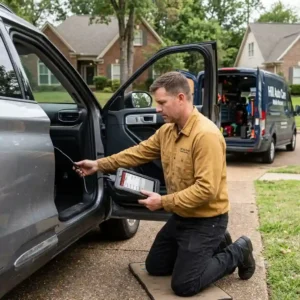
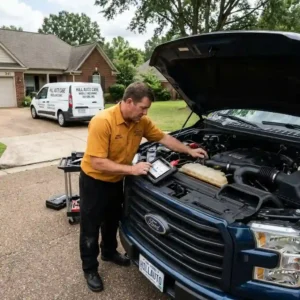
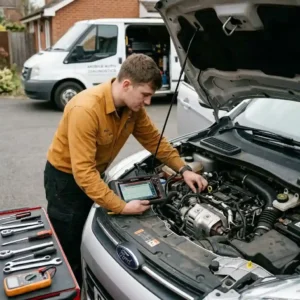
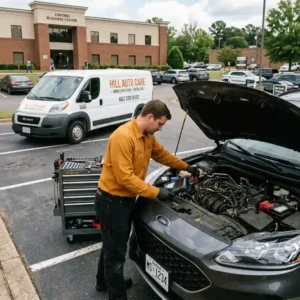
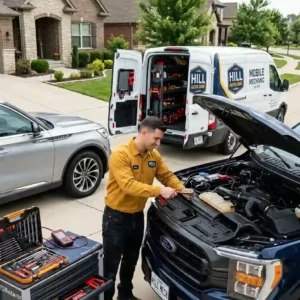
A mobile mechanic equipped with advanced diagnostic tools can complete initial scans, inspect fluid condition, check electrical harnesses, replace external shift solenoids, replace fluid filters, and service external leaks right in your driveway. Evaluating your vehicle on-site saves expensive towing fees and determines whether the problem is a minor external issue or a major internal fault requiring extensive Transmission Repair Oxford facility equipment.
When Workshop Equipment Is Necessary
If diagnostic testing reveals broken internal gearsets, a failed torque converter, or cracked case housings, the transmission must be removed from the vehicle. Major overhaul work requiring heavy hydraulic lifts and engine hoists must be completed inside an equipped facility.
To view our full range of diagnostic and mechanical repair options across Lafayette County, visit our primary SERVICES page.
Ford & Lincoln Transmission Repair in Oxford, MS
Ford and Lincoln trucks, SUVs, and sedans utilize specialized transmission architectures—from traditional 6-speed units to modern 10-speed automatic platforms (10R80). These advanced systems rely heavily on precise electronic control modules and adaptive shift algorithms that require experienced Transmission Repair Oxford technicians.
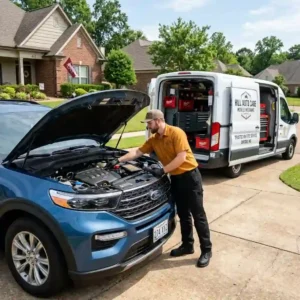
At HILL AUTO CARE, we bring specialized Ford and Lincoln diagnostic equipment directly to local drivers needing Transmission Repair Oxford support. Whether your Ford F-150 is experiencing rough 3rd-to-4th gear shifts or your Lincoln SUV shows a transmission fault light, our targeted technical expertise ensures accurate code reading, fluid testing, and electronic adaptation reset services.
Learn more about our technical background and service standards by visiting our ABOUT US page.
What Should You Do If Your Transmission Starts Acting Up?
If your vehicle begins showing shifting changes or unusual gear behavior, take these practical steps before scheduling Transmission Repair Oxford service:
- Document the Symptoms: Note when the issue occurs—whether cold starting, accelerating uphill, braking to a stop, or driving at highway speeds.
- Check for Fluid Puddles: Inspect your parking spot for reddish or brown fluid spots.
- Avoid Heavy Towing or Hard Acceleration: Reduce stress on the drivetrain to prevent thermal buildup.
- Schedule a Professional Diagnostic Check: Contact a technician to perform a computerized code scan and fluid evaluation before continuing to drive.
For industry-standard guidance on maintaining automotive driveline components, consult official resources provided by the National Institute for Automotive Service Excellence (ASE).
Frequently Asked Questions
How do I know if my transmission is slipping?
You will notice engine RPMs rising higher than usual without a matching increase in vehicle speed, along with delayed acceleration or sudden gear drops while cruising.
Can low transmission fluid cause hard shifting?
Yes. Low fluid levels reduce internal hydraulic pressure, causing shift solenoids to engage harshly or lurch between gear changes.
Is it safe to drive with a slipping transmission?
No. Driving with a slipping transmission creates intense internal heat and friction, which rapidly destroys clutch plates and leads to complete Transmission Repair Oxford failure.
Can a mobile mechanic diagnose transmission problems?
Yes. A mobile mechanic can perform diagnostic trouble code scans, check fluid levels and quality, inspect external linkages, and test shift solenoids on-site during a Transmission Repair Oxford visit.
How long can a transmission last after symptoms begin?
It varies depending on the root cause. A minor sensor or fluid issue can be resolved quickly, but continuing to drive with severe slipping or fluid starvation can destroy a transmission in a matter of miles.
Does every transmission problem require replacement?
Not at all. Many shifting issues are caused by low fluid, faulty speed sensors, failed shift solenoids, or software calibration needs that do not require full Transmission Repair Oxford replacement.
Take Control of Your Drivetrain Health
Don’t let unexplained shifting issues leave you guessing about your car’s reliability. Moving from uncertainty to a clear diagnostic evaluation protects your vehicle and prevents minor fluid or sensor faults from becoming costly engine and transmission replacements.
If you need expert Transmission Repair Oxford diagnostics or general vehicle care, contact HILL AUTO CARE today through our CONTACT US page or explore our full suite of mobile solutions on our SERVICES page!